
Why Amazon Moved Prime Day to June
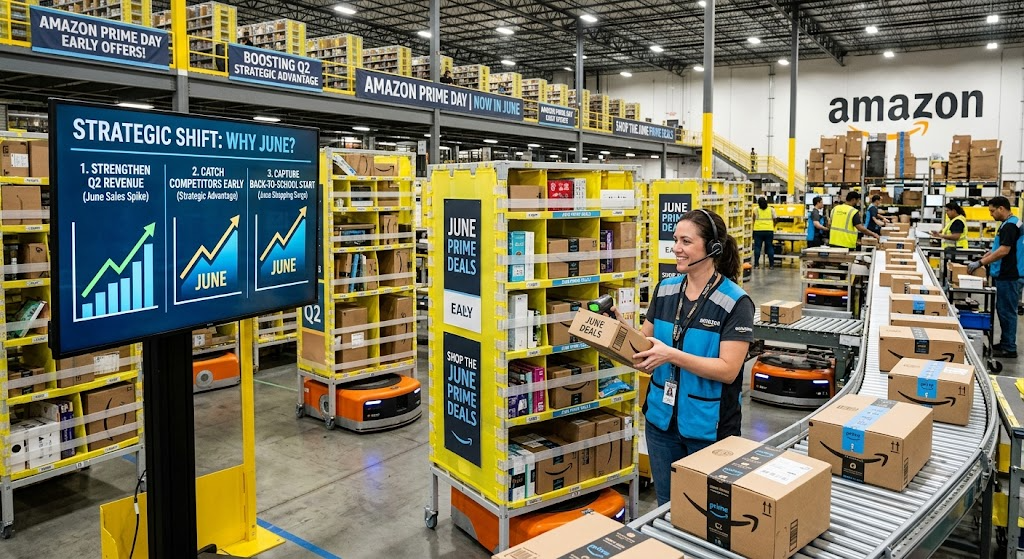
For several years now, Amazon’s Prime Day has taken place in the middle of July. For the 2026 retail year, however, Amazon is moving Prime Day to the end of June. Prime Day will officially kick off on Tuesday, June 23rd, and run for four days until Friday, June 26th. For brand managers, logistics providers, and retail analysts alike, this shift marks a fundamental change to the retail calendar. In order to protect their operating margins and tap into this early seasonal spike in consumer spending, brands must carefully analyze the strategic drivers behind this shift to June.
Q2 Balance Sheet Arbitrage
It comes down to financial engineering. While Prime Day 2025 took place in July (Q3), Prime Day 2026 has been positioned in late Q2, driving a massive surge in Gross Merchandise Value (GMV) to optimize Amazon's Q2 performance metrics.
The Metrics of the Move
- Revenue Recognition Shift: Revenue generated from Prime Day will be recognized in Q2 rather than at the end of Q3, as has historically been the case. Recognizing this revenue in an earlier period creates a significantly higher baseline for comparison against prior Q2 periods, driving stronger quarter-over-quarter (QoQ) growth metrics.
- Growth Compounding: By utilizing the 4-day format for the second consecutive year, Amazon is benefiting from growth compounding. The 4-day Prime Day in 2025 drove online spend to reach $24.1 billion in total. Building on this momentum, early projections for the 2026 event suggest total spend is poised to reach $26.5+ billion.
Prime Day Performance and Projections:
- 2024 (July 16-17, 2-Day Prime Day): $14.2 billion in total spend.
- 2025 (July 15-18, 4-Day Format): $24.1 billion in total spend (representing a 69.7% year-over-year increase).
- 2026 (June 23-26, 4-Day Format): Projected $26.5+ billion in total spend.
By shifting this massive volume from Q3 to Q2, Amazon will be able to counter the typical spring and summer e-commerce lulls, while setting a remarkably high bar for its retail competitors early in the fiscal year.
Catching the Wallet Early
Typically, online retailers find it highly challenging to engage consumers during the summer months when people are out on vacation, traveling, or simply enjoying the weather. Consequently, many e-commerce brands experience a significant seasonal slump, leaving them to fight over a limited pool of active online shoppers.
The Capture Strategy
- Capturing Discretionary Spend: Launching in June allows Amazon to capture consumers' discretionary spending before those budgets are allocated to summer travel, hotel bookings, and related vacation expenses.
- Capturing Back-to-School Spend: Amazon can kickstart the back-to-school shopping season early. By engaging high-intent buyers before they are drawn to brick-and-mortar stores or competing online retailers, Amazon secures early market share before physical shelves are even stocked.
Squeezing Big-Box Retailers
Major big-box competitors like Target and Walmart traditionally host their own prime-style promotional events in mid-July. By shifting Prime Day to June, Amazon effectively hijacks the summer promotional calendar, capturing high-margin summer discretionary dollars before consumers can spend them during competing events.
Retail Calendar Disruption Channels
- Traditional Summer Discount Cycle: Historically, the retail calendar dedicated June to logistics, supply chain prep, and marketing coordination ahead of major July clearance events.
- Amazon’s June Hijack: By launching Prime Day in June, Amazon intercepts summer discretionary spend before families travel. This captures early-season retail volume and forces competing retailers to clear out their own summer inventories at steep, margin-eroding discounts in July to match Amazon's early promotions.
The Margin Squeeze
- Forced Early Markdowns: Amazon’s June launch forces competitors to kick off their own summer marketing campaigns prematurely just to keep pace with Amazon’s marketing machine. This early promotional activity inevitably erodes the margins of spring and early-summer inventory that has not yet sold through at full retail price.
- Supply Chain Disruption: Competitors that rely on slower ocean freight routes to restock from global manufacturers cannot pivot fast enough to match Amazon’s agility. Amazon can rapidly spin up promotions and position inventory across localized fulfillment networks in a matter of days, leaving competitors flat-footed.
Navigating the Compressed Timeline as an Amazon Seller
For third-party brands, navigating the next 3 to 4 weeks on Amazon presents critical operational risks. Below, we detail 3 core strategies to mitigate these disruptions and protect your business:
Mitigate FBA Late-Arrival Rejections
For inventory arriving at fulfillment centers after the Prime Day rush begins, shipments will be subject to the strict FBA prep rules implemented on January 1, 2026. Any shipment arriving without pre-applied, certified barcodes will be rejected and returned to the shipper at the sender's expense. This represents a significant risk for third-party brands relying on FBA for storage and order fulfillment.
- The Action: Ensure all products are fully labeled by your factory or 3PL prior to shipping. Communicate immediately with your suppliers or 3PL partners to guarantee compliance. Amazon’s inbound workflow does not allow for re-labeling inside FBA warehouses if shipments fail to meet the updated preparation standards.
Establish a FBM Backup Channel
With shipping lanes heavily congested as peak shipping shifts earlier in the year, there is a high risk that inventory destined for FBA will arrive after the June 23rd kickoff.
- The Action: Set up parallel Merchant Fulfilled (FBM) listings for your best-selling items (ASINs) using a reliable local 3PL that can support rapid delivery. If your FBA stock is depleted during the rush, you can immediately toggle the FBM listings active to maintain sales momentum and protect your organic search ranking.
Run Targeted, Long-Tail Ad Campaigns
Avoid wasting ad budget on hyper-competitive, high-cost broad keywords like "Prime Day Deals" during the intense June 23–26 window.
- The Action: Shift your advertising spend toward exact match long-tail phrases and conversational keywords. This approach allows you to reach highly targeted, ready-to-buy shoppers who are actively searching for terms related to your products—especially those utilizing next-generation conversational tools like Amazon's Rufus or Alexa-powered search interfaces.